
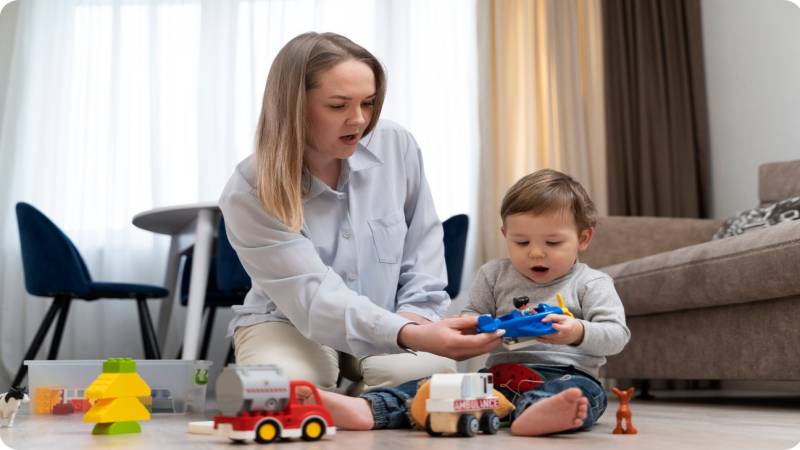
Parents and caregivers have many options available, from simple building blocks and puzzles to pretend-play sets, art supplies, books, and outdoor equipment. With so many choices, it can sometimes be difficult to decide which toys are genuinely useful and which may only provide short-term entertainment.
This guide explains the main things parents should consider when selecting toys. It also discusses developmental benefits, safety, age suitability, imaginative play, and ways to create a balanced toy collection at home.
Why Toys Matter in Early Childhood
Play is one of the natural ways children learn about themselves and the world around them. During play, children experiment with ideas, practice different skills, and learn how objects and people interact.
For example, a child playing with blocks may learn about balance, shapes, and simple problem-solving. A child using crayons may develop hand control while expressing ideas through pictures. Pretend play can help children understand everyday situations and practice communication.
The value of a toy does not necessarily depend on how expensive or technologically advanced it is. A simple toy can provide hours of meaningful play when it allows children to explore, create, and make their own decisions.
Choosing Toys According to Age
Age is one of the most important factors when selecting toys. A toy should be appropriate for the child’s developmental stage and abilities.
Babies often benefit from toys that encourage safe sensory exploration. Soft objects, rattles, textured toys, and objects that are easy to grasp can help babies explore sounds, movement, colors, and textures.
Toddlers generally enjoy toys that allow them to move, stack, sort, push, pull, and imitate adults. Simple puzzles, large blocks, toy vehicles, and pretend-play objects can be useful choices.
Preschool children often become interested in more complex pretend play, drawing, construction, matching games, and beginner puzzles. They may also enjoy toys that involve stories, role-playing, and group activities.
Older children may benefit from construction sets, strategy games, craft materials, science-related activities, musical instruments, and toys that encourage independent projects.
When choosing cwbiancaparenting toys, parents should focus on the child’s current abilities rather than simply choosing something because it is marketed for a particular age. Children develop at different rates, so individual interests and skills are also important.
The Importance of Open-Ended Toys
Open-ended toys can be used in many different ways. Instead of having one fixed purpose, they allow children to decide how they want to play.
Building blocks are a classic example. One child may use them to construct a house, while another may build a bridge, tower, or imaginary city. The same set can support different types of play as the child grows.
Other open-ended options include:
-
Wooden or plastic building pieces
-
Drawing and painting supplies
-
Play dough
-
Dress-up clothing
-
Toy animals
-
Dolls and figures
-
Simple craft materials
-
Cardboard boxes
-
Pretend kitchen equipment
These types of toys can encourage imagination because children create the rules and stories themselves. They also allow children to return to the same toy repeatedly without having exactly the same experience.
Toys That Encourage Imagination
Imaginative play gives children an opportunity to create situations based on their experiences, interests, and ideas. A child may pretend to be a doctor, teacher, chef, shopkeeper, parent, firefighter, or explorer.
Pretend play can support language development because children often talk while creating imaginary situations. It can also help them practice social interactions, particularly when playing with siblings or friends.
Parents do not always need to direct this type of play. Giving children time and space to develop their own stories can make the experience more meaningful.
Simple objects can sometimes be more useful than highly detailed toys because they leave room for imagination. A cardboard box, for example, can become a car, house, shop, spaceship, or anything else a child imagines.
Educational Toys and Learning Through Play
Educational toys are designed to introduce or practice particular skills, but learning does not have to feel like formal studying.
Puzzles can encourage children to recognize shapes, patterns, and relationships. Sorting games can introduce concepts such as colors, sizes, and categories. Building toys can help children explore balance, structure, and spatial awareness.
Letters and numbers can also be introduced through age-appropriate games. However, parents should avoid turning every play activity into a lesson. Children need opportunities to play simply for enjoyment.
A good balance can include toys that support different areas of learning while still allowing children to choose what interests them.
The Role of Creative Toys
Creative activities allow children to express ideas rather than simply follow instructions. Art supplies such as washable crayons, colored pencils, paper, paints, and child-safe modeling materials can encourage experimentation.
Creative play can also help children develop fine motor skills. Holding a pencil, cutting with child-safe scissors, drawing lines, or shaping modeling material requires controlled hand movements.
Parents can encourage creativity by asking open questions rather than correcting the child’s work. Instead of focusing on whether a drawing looks realistic, they can ask children to explain what they created.
The goal is to make creativity enjoyable and allow children to develop confidence in expressing themselves.
Physical Play and Active Toys
Children also need opportunities for physical activity. Toys that encourage movement can help them practice coordination, balance, and body control.
Depending on age and available space, examples may include balls, ride-on toys, jump ropes, simple sports equipment, and outdoor play equipment.
Outdoor play can provide additional benefits because children can move around more freely and experience different environments. Activities such as throwing, catching, running, climbing, and balancing can become part of everyday play.
Safety should always come first, particularly when children use equipment outdoors. Parents should consider the child’s age, ability, surroundings, and appropriate protective equipment where necessary.
Safety Should Always Come First
A toy should be enjoyable, but it must also be suitable and safe for the child using it.
Parents should check age recommendations and inspect toys regularly. Broken pieces, sharp edges, loose parts, or damaged components can create unnecessary risks.
For younger children, small parts require particular attention because they can present a choking hazard. Toys intended for older children should also be kept away from younger siblings when they contain unsuitable small components.
Battery compartments should be secure, and parents should follow the manufacturer’s safety instructions when a toy uses batteries or other components.
Supervision may also be appropriate for toys or activities that involve materials, tools, movement, or equipment that could present a safety risk.
Avoiding Too Many Toys
Having a large number of toys does not necessarily create better play. When children have too many choices at once, they may move quickly from one toy to another without spending much time exploring any of them.
A smaller collection can make it easier for children to focus. Parents can also rotate toys periodically. Some toys can be stored for a few weeks and then brought back later.
Toy rotation does not require buying new products. It simply changes which toys are available. A familiar toy may feel interesting again when it has not been visible for some time.
Considering the Child’s Interests
Every child has different interests. One child may enjoy construction, while another prefers drawing, pretend play, music, puzzles, animals, or physical activities.
When considering cwbiancaparenting toys, parents can observe what naturally attracts the child. If a child repeatedly builds structures, construction toys may provide more meaningful play than a toy chosen only because it is currently popular.
Similarly, a child who loves stories may enjoy puppets, figures, costumes, or other materials that allow storytelling.
Following a child’s interests can make play more engaging while still supporting learning and development.
Playing Together
Although independent play is valuable, children can also benefit from playing with parents, siblings, and friends.
Adults can join a child’s activity without taking control of it. For example, a parent can build alongside a child, ask questions about a pretend story, or participate in a simple game.
Playing together can support communication and social skills. It also gives parents an opportunity to understand what their children enjoy and how they approach problems.
The adult does not need to make every activity educational. Sometimes simply sharing enjoyable time together is the most valuable part.
Choosing Toys Responsibly
Parents may also consider durability, materials, maintenance, and long-term usefulness when selecting toys. A durable toy that can be used in several ways may remain interesting for longer than a product designed around one short-lived activity.
It is also useful to consider whether the toy is easy to clean and store. Toys that are frequently used should be kept in a condition that is appropriate for regular play.
Parents do not need to buy every new toy that becomes popular. A thoughtful collection built around different types of play can provide plenty of opportunities for children to learn and have fun.
Building a Balanced Toy Collection
A balanced collection can include several categories rather than many versions of the same type of toy. For example, a home might have:
-
Building and construction toys
-
Creative and art materials
-
Books and storytelling materials
-
Puzzles and simple games
-
Pretend-play items
-
Toys for physical activity
-
Age-appropriate sensory toys
This approach gives children different ways to play. It also allows parents to observe which activities their children prefer.
When purchasing cwbiancaparenting toys, the main goal should be to select items that are safe, age-appropriate, engaging, and useful for the child’s individual stage of development.
Final Thoughts
Toys can play an important role in childhood by giving children opportunities to explore, imagine, create, move, communicate, and solve problems. The most useful toy is not necessarily the most expensive, newest, or most technologically advanced option.
Parents can make better choices by considering age, safety, interests, developmental needs, and the different types of play a toy encourages. Open-ended toys are particularly useful because they can support changing interests and allow children to create their own experiences.
Ultimately, cwbiancaparenting toys should be viewed as tools for play rather than replacements for interaction, creativity, or real-world experiences. A thoughtful combination of toys, books, outdoor activities, creative materials, and shared play can give children a rich environment in which to explore and grow.See More